
Recovering from a stroke is a complex journey that involves healing both the body and the brain. Rehabilitation exercises, therapy, and consistent practice are often the foundation of progress. However, nutrition can also play a meaningful supporting role in recovery.
After a stroke, the brain undergoes a process called neuroplasticity, which allows it to reorganize and form new neural connections. This is how survivors relearn skills like moving an arm, speaking clearly, or walking again. While therapy provides the stimulus for these changes, the body still needs the right nutrients to support brain repair, energy production, and cellular recovery.
This is where vitamins and nutrients may help. Research suggests that stroke survivors often have lower levels of several important nutrients, including vitamin B12, vitamin C, vitamin E, and omega-3 fatty acids, which may influence recovery and overall health.
In this article, we’ll explore seven vitamins and nutrients that have shown promise in stroke recovery based on clinical and scientific research. We’ll also explain how each one supports brain health and what current studies suggest about their potential benefits.
As always, remember that any vitamins or supplements MUST be discussed with your healthcare professional before starting them, especially after a stroke.
Let’s jump in!
Jump directly to a section by tapping any of the links below:
Why Vitamins Can Matter for Stroke Recovery
What Is the Best Multivitamin for Stroke Recovery?
How to Safely Add Vitamins to Your Stroke Recovery Plan
Why Vitamins Can Matter for Stroke Recovery
After a stroke, the body enters a period of intense repair. Brain tissue may have been damaged, neural pathways disrupted, and muscles weakened due to lack of use. And during this time, the body requires increased nutritional support.
However, several factors can contribute to nutritional or vitamin deficiency after stroke including:
- Reduced appetite or swallowing difficulties
- Changes in diet during hospitalization
- Increased metabolic demand during healing
- Reduced mobility and sunlight exposure
And importantly, researchers have found that poor nutritional status can negatively affect rehabilitation outcomes, while adequate nutritional support may improve motor recovery, cognition, mood, and daily function.
In other words, vitamins are not a “magic cure”, vut when combined with therapy, exercise, and medical care, they may help create a more supportive environment for recovery.
Now with that said, let’s explore the best science backed vitamins and nutrients for stroke recovery!
1. Vitamin D
Vitamin D is one of the most widely studied nutrients in stroke recovery. Often called the “sunshine vitamin,” it plays a role in muscle function, immune health, and neurological activity.
Low vitamin D levels are common among stroke survivors, especially those who spend less time outdoors during recovery.
What the Research Says
Research studies show that vitamin D is one of the best vitamins for stroke recovery.
Low levels of vitamin D are associated with worse outcomes after ischemic stroke, which accounts for 87% of all strokes in America. Furthermore, vitamin D deficiency is associated with stroke risk factors like hypertension, obesity, and diabetes.
Fortunately, after supplementing with vitamin D, “there is a significant improvement in stroke outcomes after 3 months.”
Getting enough vitamin D can also provide neuroprotective, neuromuscular, and osteoprotective benefits which can reduce cognitive and functional impairments in individuals after a stroke.
By getting your daily dose of vitamin D, you can reduce your risk of another stroke while aiding your brain’s recovery.
Potential Benefits
- Improving muscle strength
- Supporting brain cell signaling
- Reducing inflammation
- Enhancing rehabilitation outcomes
How To Get More Vitamin D
- Fatty fish (salmon, sardines)
- Egg yolks
- Fortified dairy products
- Sunlight exposure
2. Vitamin B12 (Cobalamin)
Vitamin B12 is essential for nerve health and brain function. It helps produce myelin, the protective coating around nerves that allows signals to travel efficiently through the nervous system.
Because stroke affects the nervous system directly, adequate B12 levels may be especially important during recovery.
What the Research Says
Clinical research shows that B-vitamin supplementation (including B12, B6, and folic acid) can reduce levels of homocysteine, a compound associated with increased stroke risk and vascular damage.
Lowering homocysteine may help protect blood vessels and reduce the risk of recurrent stroke.
In addition, supplementing with vitamin B12 in individuals that are deficient may enhance stroke recovery by boosting the function and development of the brain and nerve cells. This encourages neuroplasticity, which is the brain’s ability to reorganize itself, create new neural pathways, and rearrange existing ones.
Potential Benefits
- Support nerve repair
- Improve cognitive function
- Reduce fatigue
- Maintain healthy blood cells
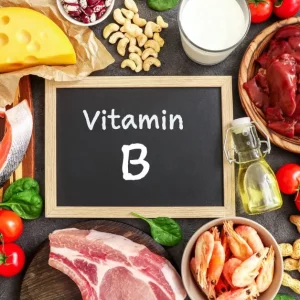
How To Get More Vitamin B12
- Fish and seafood
- Eggs
- Dairy products
- Fortified cereals
3. Vitamin B6 (Pyridoxine)
Vitamin B6 works closely with B12 and folate to regulate homocysteine levels in the blood. Elevated homocysteine is associated with vascular damage and may increase the risk of stroke and cardiovascular disease.
By helping regulate this compound, B6 may support healthier circulation.
What the Research Says
A large scale double blind study examining B-vitamin combinations found that supplementation significantly reduces homocysteine levels, which may reduce stroke recurrence risk in certain populations. And while the the exact impact on recovery outcomes varies between studies, maintaining adequate B-vitamin levels remains an important part of neurological health.
Potential Benefits
- Support neurotransmitter production
- Improve brain metabolism
- Maintain vascular health
How To Get More Vitamin B6
- Bananas
- Chickpeas
- Poultry
- Potatoes
4. Vitamin B9 (Folate)
Folate is another key B vitamin that works together with B6 and B12 to regulate homocysteine. This vitamin also plays an important role in DNA synthesis and cell repair, which are essential during neurological recovery.
What the Research Says
Meta-analyses involving tens of thousands of participants show that folic acid supplementation may reduce stroke risk by roughly 10–11% in some populations. Although most research focuses on prevention, maintaining adequate folate levels may still support vascular health and recovery processes.
Potential Benefits
- Support blood vessel health
- Assist cellular repair
- Improve circulation
How To Get More Vitamin B9 (Folate)
- Spinach
- Lentils
- Avocados
- Asparagus
5. Vitamin B3 (Niacin)
Vitamin B3, also known as niacin, plays an important role in energy production and cellular repair. It helps convert food into usable energy and supports the health of the nervous system, skin, and digestive system.
After a stroke, the brain requires large amounts of energy to support healing and neuroplasticity. Because of this, nutrients that help maintain cellular metabolism may be particularly valuable during recovery.
Niacin is also involved in the production of NAD (nicotinamide adenine dinucleotide), a molecule that plays a key role in cellular energy and repair processes throughout the body, including the brain.
What the Research Says
Some experimental and clinical studies suggest that niacin may support neurological recovery after stroke. For example, several early studies found that niacin and niacin-like compounds may promote neuroplasticity and blood vessel growth in the brain, which could help improve functional recovery in the weeks and months following a stroke.
Additional studies of adult male rats have shown that niacin treatment can stimulate angiogenesis (the formation of new blood vessels) and increase levels of brain-derived neurotrophic factor (BDNF), a protein that helps neurons grow and form new connections.
These mechanisms may help explain why researchers are interested in niacin as a potential supportive therapy for stroke recovery. However, while these results are promising and suggest Vitamin B3 may play a supportive role in neurological healing, more large scale human trials are still needed.
Potential Benefits
- Supporting cellular energy production
- Promoting blood vessel growth in the brain
- Supporting neuroplasticity and nerve repair
- Improving circulation
How To Get More Vitamin B3
- Chicken and turkey
- Tuna and salmon
- Peanuts
- Brown rice
- Mushrooms
- Whole grains
6. Vitamin C
Vitamin C is a powerful antioxidant that helps protect the body’s cells from damage caused by oxidative stress. After a stroke, the brain can experience increased inflammation and oxidative damage as it responds to the injury. Because brain cells are particularly sensitive to this type of stress, antioxidants may play an important supportive role during recovery.
Vitamin C also contributes to the production of collagen, which helps maintain the health of blood vessels. Healthy blood vessels are important for delivering oxygen and nutrients to the brain, especially during the healing process.
Additionally, vitamin C supports immune function and helps the body repair damaged tissues, both of which can be valuable during rehabilitation.
What the Research Says
Several studies have explored the relationship between vitamin C levels and stroke outcomes. Research has found that individuals with higher vitamin C levels tend to have a lower risk of stroke, suggesting this nutrient may play a protective role in vascular health.
In addition, experimental studies suggest vitamin C may help reduce oxidative damage and inflammation in the brain following a stroke. By neutralizing harmful free radicals, vitamin C may help protect neurons and support the brain’s recovery environment.
While vitamin C is not a standalone treatment for stroke, maintaining healthy levels may help support overall brain health and recovery when combined with rehabilitation and medical care.
Potential Benefits
- Protecting brain cells from oxidative damage
- Supporting healthy blood vessels
- Reducing inflammation
- Helping repair damaged tissues
How To Get More Vitamin C
- Oranges and citrus fruits
- Strawberries
- Kiwi
- Bell peppers
- Broccoli
- Brussels sprouts
7. Vitamin E
Vitamin E is another antioxidant that helps protect cells from oxidative damage. Because the brain is highly sensitive to oxidative stress, maintaining adequate antioxidant levels may be beneficial during recovery.
What the Research Says
Some experimental studies suggest vitamin E may help reduce oxidative damage in brain cells and support neuronal survival following a stroke. By neutralizing free radicals, vitamin E may help create a healthier environment for the brain to heal and reorganize itself during neuroplasticity.
However, the relationship between vitamin E and stroke is complex. While moderate dietary intake of vitamin E from foods appears beneficial for overall cardiovascular health, high-dose vitamin E supplements have produced mixed results in clinical research. Some studies have suggested that very high doses may increase the risk of hemorrhagic stroke (bleeding in the brain) in certain individuals.
For this reason, vitamin E supplementation should always be discussed with a physician, especially for stroke survivors who may be taking medications such as blood thinners or other cardiovascular treatments.
Potential Benefits
- Protect brain cells
- Support immune function
- Reduce oxidative stress
How To Get More Vitamin E
- Almonds
- Sunflower seeds
- Spinach
- Avocados
What Is the Best Multivitamin for Stroke Recovery?
After learning about individual nutrients, many stroke survivors wonder whether taking a daily multivitamin might be the easiest way to support recovery.
The truth is that a multivitamin can sometimes help, but it should never replace a balanced diet or medical care. Instead, it can serve as a nutritional safety net that helps fill potential gaps in your diet.
What to Look for in a Multivitamin After Stroke
If you and your doctor decide that a multivitamin makes sense for your recovery plan, it helps to choose one that includes nutrients that support brain and vascular health.
Look for a multivitamin that includes:
- B vitamins (B6, B12, and folate) for nerve health and homocysteine regulation
- Vitamin D for muscle function and neurological health
- Vitamin C for antioxidant support
- Vitamin E for cellular protection
- Magnesium or zinc for metabolic and neurological function
Many high-quality multivitamins contain these nutrients in balanced amounts that stay close to recommended daily intake levels. Remember to always discuss any multivitamin or supplement you are considering taking with your doctor beforehand!
Important Reminder: Vitamins Are Only One Piece of Your Stroke Recovery Plan
One thing to remember when considering vitamin supplementation post stroke — it’s important to keep your expectations realistic. Vitamins alone cannot restore lost function after stroke.
Recovery primarily comes from consistent rehabilitation and repetitive practice, which stimulate the brain to form new neural connections.
Vitamins and proper nutrition simply help support that process by ensuring the brain and body have the resources needed for repair.
How to Safely Add Vitamins to Your Stroke Recovery Plan
Before taking any supplements, speak with your doctor or healthcare provider!
Some vitamins can interact with medications commonly prescribed after stroke, including blood thinners so this cannot be overstated that you need to talk with your healthcare provider to see what is appropriate for you!
A healthcare professional can help determine:
- Whether you actually have a deficiency
- The safest dosage
- Possible medication interactions
Supporting Your Brain’s Ability to Recover After Stroke With the Right Vitamins
Stroke recovery often requires patience and persistence. Some days may feel slow, while others bring surprising breakthroughs and that is completely normal.
While vitamins and nutrition can support the healing process, the most powerful driver of recovery remains repetition and consistent therapy because the brain changes when it is challenged repeatedly through movement, practice, and engagement.
So as you focus on healthy nutrition, remember to also keep moving, practicing, and giving your brain the stimulation it needs to rebuild. Progress may take time, but with the right support and persistence, meaningful improvements are possible.
We hope you enjoyed this article and subscribe to our newsletter for weekly articles just like this delivered straight to your inbox — subscribe here.
Want to learn more? Here are some additional articles to check out!
Here Are the 11 Best Supplements for Stroke Recovery
Natural Remedies for Stroke Recovery You Can Try at Home
Omega-3 and Stroke: Reviewing the Benefits of Omega 3s for Stroke Prevention and Recovery